

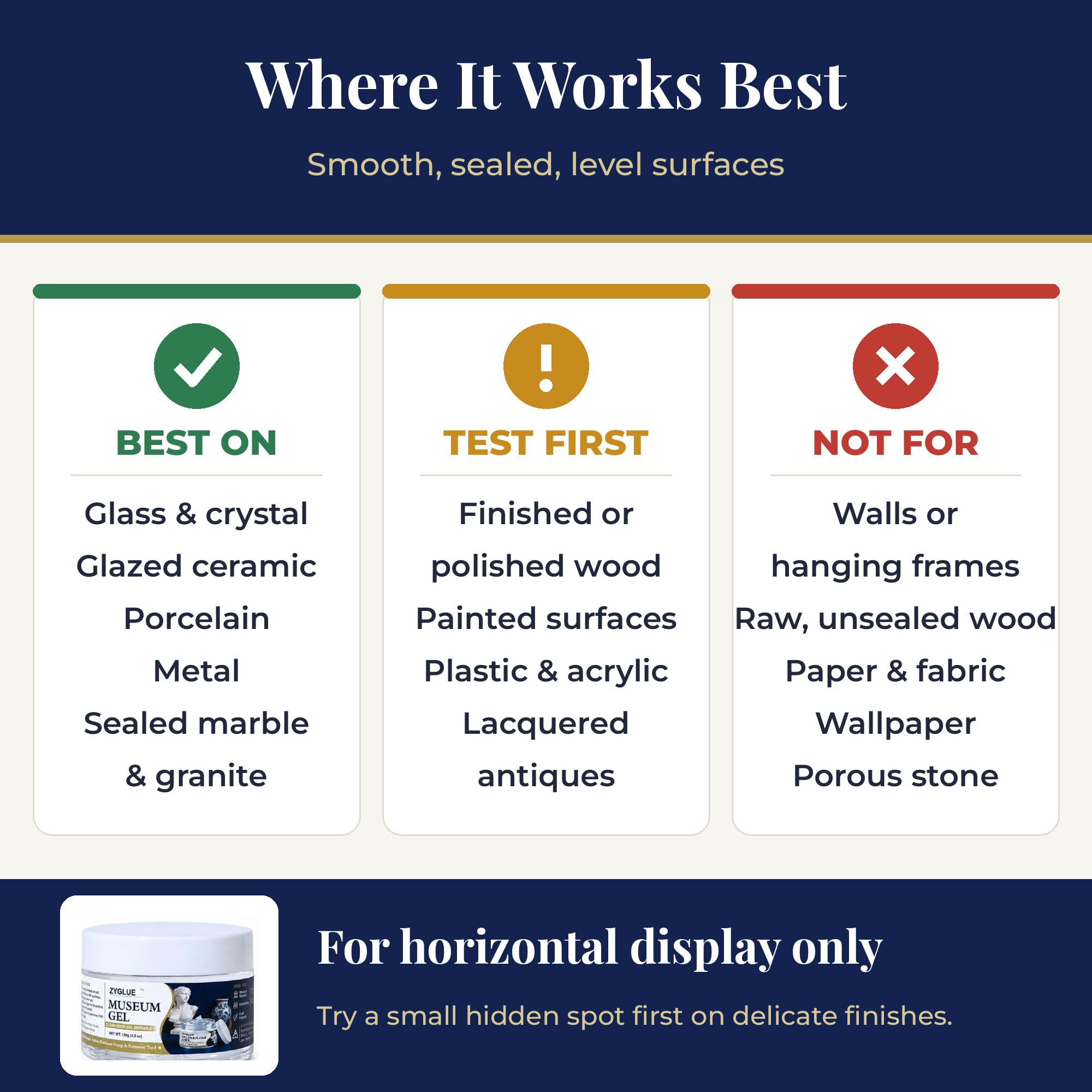
Museum gel works best on smooth, sealed, horizontal surfaces such as glass, crystal, glazed ceramic, porcelain, metal, sealed marble and granite, and acrylic. Test a small hidden spot first on finished wood, paint, lacquer, plastic and antique finishes, and do not use it on walls, porous materials, outdoors or in hot spots.
Why does the surface matter so much?
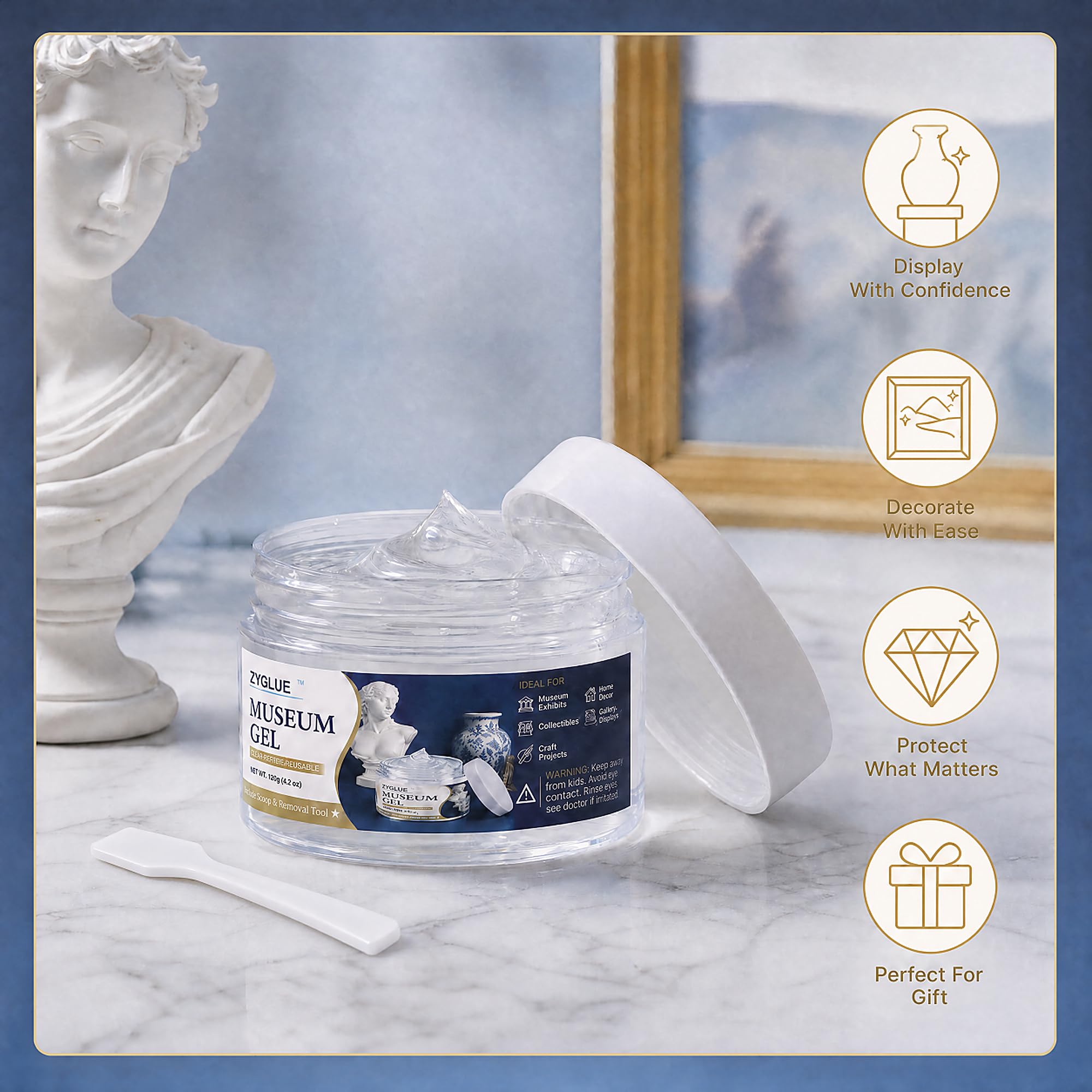
ZYGLUE™ Museum Gel is a clear, removable, reusable gel that helps keep display items from sliding or tipping on flat surfaces. The user manual says it holds by forming a micro-vacuum between the gel and a smooth surface, not by stickiness. A smooth, sealed surface lets the gel make full contact. A rough or porous surface does not, and it can also soak up oil from the gel.
That is why the same jar can hold well on a glass shelf and be the wrong choice for a raw wood plank. The manual warns the gel may leave permanent oil stains on porous materials.
Museum gel surface chart
| Surface | Use museum gel? | Notes |
|---|---|---|
| Glass | Yes, best | Clear gel is hard to see under glass |
| Crystal | Yes, best | Clean and dry before use |
| Glazed ceramic and porcelain | Yes, best | Glaze gives a smooth, sealed face |
| Metal | Yes, best | Wipe off dust and oil first |
| Sealed marble and granite | Yes, best | Must be sealed, not raw stone |
| Acrylic | Yes, best | Good for risers and display cases |
| Finished or polished wood | Test first | Sealed or finished only; test a small hidden spot |
| Painted surfaces | Test first | Test a small hidden spot |
| Lacquered surfaces | Test first | Test a small hidden spot |
| Plastic | Test first | Test a small hidden spot |
| Antique finishes | Test first | Test a small hidden spot |
| Unfinished wood | No | Porous; may leave permanent oil stains |
| Raw or porous stone | No | Porous; may leave permanent oil stains |
| Paper, cork, fabric, wallpaper | No | Porous; may leave permanent oil stains |
| Walls, hanging frames, vertical or angled surfaces | No | Gel can slide and the item can fall |
| Outdoors, direct sun, hot areas above 104 °F (40 °C) | No | Gel softens, can lose grip and leave residue |
| Heavy or irregular-shaped items | No | May not hold securely; can shift or fall |
In short: indoors, horizontal display only, on smooth and sealed surfaces.
Which surfaces work best?
Glass, crystal, glazed ceramic, porcelain, metal, sealed marble and granite, and acrylic are all smooth and sealed. They are also the materials most display pieces and shelves are made from, so ZYGLUE fits most china cabinets, display cases, glass shelves, stone mantels and side tables. The gel removes cleanly from smooth, sealed surfaces when you twist the item and lift.
Which surfaces need a test first?
Finished or polished wood, painted, lacquered and plastic surfaces, and antique finishes vary a lot from one piece of furniture to the next. Some finishes are hard and smooth, others are soft or worn. Always test a small hidden spot first.
How do you test a hidden spot?
- Pick a spot out of sight, such as the back corner of a shelf or the spot a display item will cover.
- Clean it so it is dry and free of dust or oil.
- Press a pea-size bead onto the spot and leave it to set for 30 to 60 minutes.
- Remove it by peeling or rolling it off by hand, then wipe with a dry cloth.
- Check the finish before you use the gel on that surface for your display.
Where should you not use museum gel?
- Walls, hanging frames and any vertical or angled surface. It is for horizontal surfaces only. The gel can slide and the item can fall.
- Porous materials such as unfinished wood, raw or porous stone, paper, cork, fabric and wallpaper.
- Outdoors, in direct sun or in hot areas. The gel softens above 40 °C (104 °F).
- Heavy or irregular-shaped items. They may not hold securely and can shift or fall.
How do you remove museum gel from a surface?
Twist the item gently and lift; do not pull straight up. Peel or roll leftover gel off by hand and wipe with a dry cloth. For tougher marks, use warm water or an alcohol-based wipe. Then reuse the gel when you rearrange. For more on how the gel compares with putty and wax, see Museum Gel vs Museum Putty vs Museum Wax.
Keep the jar away from children and avoid eye contact, and store it cool and dry with the cap closed.
Which ZYGLUE pack should you get?
Start with the ZYGLUE 1 Pack if you want to test your surfaces and secure a shelf or two. Choose a larger pack for more rooms or bigger displays.
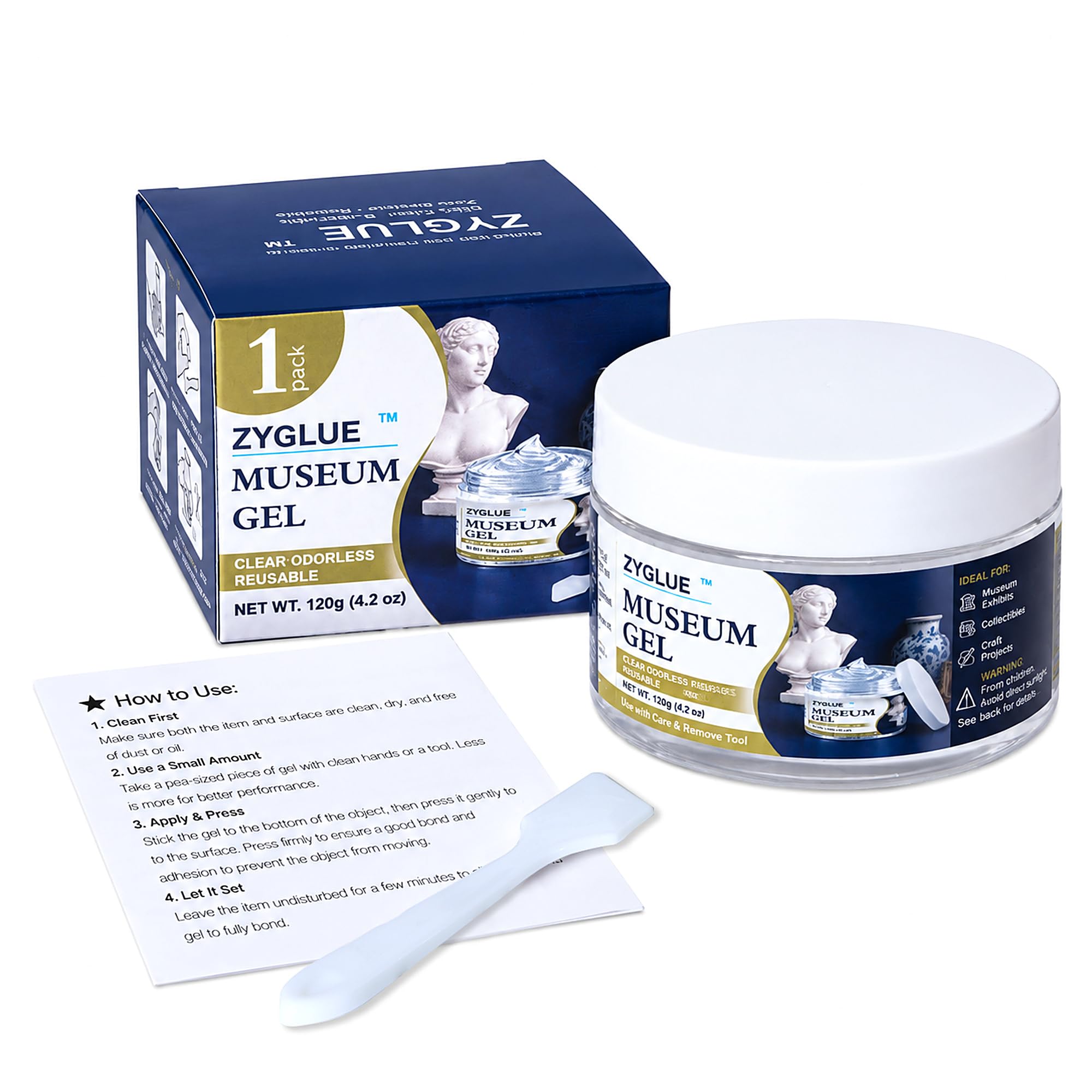
- 1 Pack: 1 jar, 4.2 oz (120 g), 1 spatula
- 2 Pack: 2 jars, 8.4 oz (240 g), 2 spatulas
- 3 Pack: 3 jars, 12.6 oz (360 g), 3 spatulas
Frequently asked questions
Which surfaces can I use it on?
Smooth, sealed surfaces such as glass, glazed ceramic, metal and sealed stone. Test a small hidden spot first on finished wood, paint, plastic or lacquer.
Can I use it on walls or to hang frames?
No. It is for horizontal surfaces only.
Can I use museum gel on wood furniture?
Only on sealed or finished wood, and test a small hidden spot first. Do not use it on unfinished wood, which is porous and may get permanent oil stains.
Does heat affect it?
Yes. The gel softens above 40 °C (104 °F), so keep it out of direct sun and hot areas.
Can I use it outdoors?
No. It is for indoor, horizontal display only.
Buy ZYGLUE Museum Gel from SN International
ZYGLUE is SN International's own brand of clear museum gel for smooth, sealed display surfaces. You can buy it at retail as a guest or with a free account. Businesses, gift shops and resellers can apply for a business account to see member pricing. Orders ship nationwide from our California warehouse, and real people answer the phone Monday to Friday. See all three packs on the ZYGLUE brand page.