

To remove museum gel, twist the item gently and lift it; do not pull straight up. Then peel or roll any leftover gel off with your fingers, wipe the surface with a dry cloth, and use warm water or an alcohol-based wipe only for tougher marks.
This guide walks through each step, explains what causes museum gel residue, and shows how to clean different surfaces without harming the finish.
How do you remove museum gel from an item?
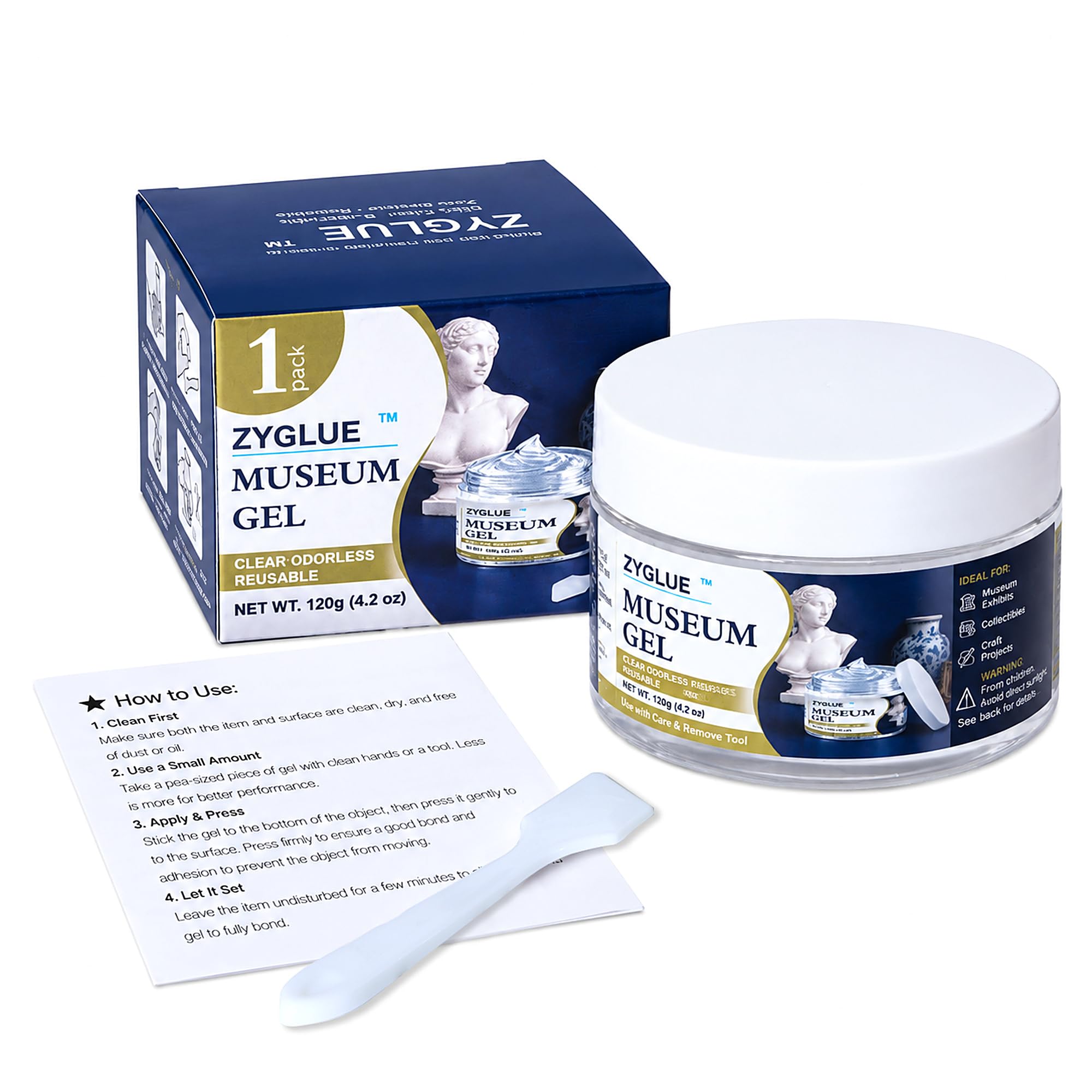
ZYGLUE™ Museum Gel is a clear, removable, reusable gel. The user manual explains that it holds by forming a micro-vacuum between the gel and a smooth surface, not by stickiness, so it comes off with a gentle twist rather than force.
- Twist and lift. Hold the item near its base, twist it gently, and lift. Do not pull straight up.
- Roll off the leftover gel. Peel or roll any gel left on the item or the surface off by hand. It usually gathers into a small ball as you roll it.
- Wipe with a dry cloth. A soft, dry cloth takes care of most light marks.
- Handle tougher marks. For anything that stays, use warm water or an alcohol-based wipe. On finished or delicate surfaces, test a small hidden spot first.
Why twist instead of pulling straight up?
The manual says to twist rather than pull. A gentle twist releases the hold without yanking the item, which is easier on fragile pieces like glass, crystal and porcelain, and easier on the surface below. Pulling straight up puts all the force on the item at once, which raises the chance of a slip or a drop.
What causes museum gel residue?
On smooth, sealed surfaces, museum gel usually rolls off cleanly. Residue tends to come from one of these:
- Heat. The gel softens above 40 °C (104 °F). In direct sun or hot areas it can lose grip and leave residue.
- Too much gel. Two to four pea-size beads hold most small items. Extra gel can squeeze out at the edges, and the edges may spread slightly after a few hours. Trim the excess early.
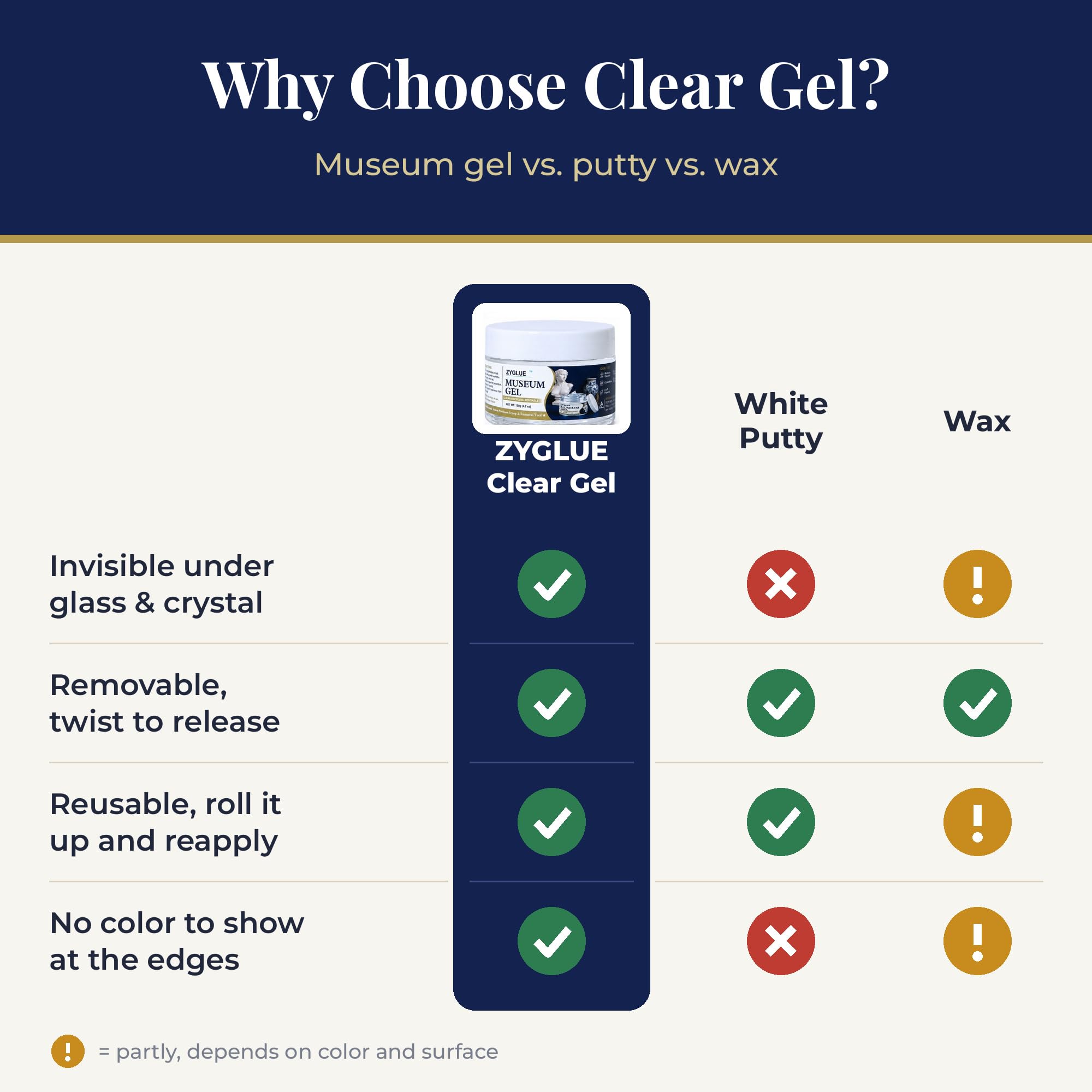
- Porous surfaces. Unfinished wood, raw or porous stone, paper, cork, fabric and wallpaper can absorb oil. The manual warns the gel may leave permanent oil stains on porous materials, which is why it should not be used on them at all.
How do you clean museum gel residue from different surfaces?
Glass, crystal, glazed ceramic, porcelain and metal
Roll off the leftover gel, then wipe with a dry cloth. For tougher marks, warm water or an alcohol-based wipe usually finishes the job.
Sealed marble, granite and acrylic
Start with rolling and a dry cloth. If you need more, try warm water first, then an alcohol-based wipe on a small hidden spot before using it on the visible area.
Finished wood, paint, lacquer, plastic and antique finishes
Go gently. Roll off what you can and use a dry cloth. Before using warm water or an alcohol-based wipe, test a small hidden spot first, since finishes vary.
How do you avoid residue next time?
- Use it on smooth, sealed, horizontal surfaces only, never on walls, hanging frames, or vertical or angled surfaces.
- Clean and dry the item and surface before you apply the gel.
- Use a small amount and keep the gel away from the edges of the base.
- Keep displays out of direct sun and hot areas.
- Inspect every 1 to 2 months, especially when the seasons or room temperature change.
Can you reuse museum gel after removing it?
Yes. The same gel can be reused when you rearrange a display, as long as it is still clean. Keep the jar's cap tightly closed between uses and store it cool, dry and out of direct sun. After opening, a jar lasts about 18 months. For a refresher on applying it, see What Is Museum Gel?, and for how gel compares with other options, see Museum Gel vs Museum Putty vs Museum Wax.
Which ZYGLUE pack should you get?
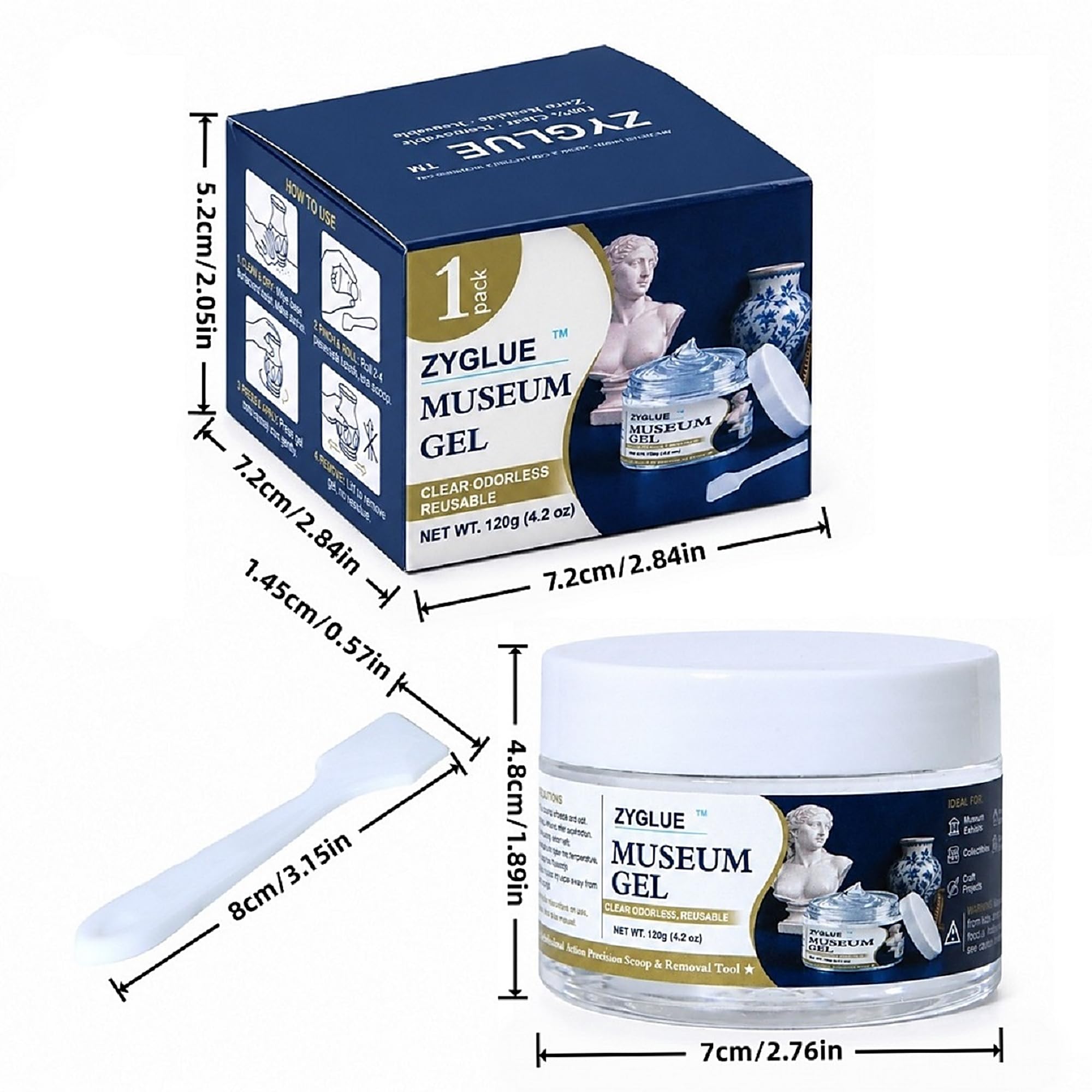
Every jar is 4.2 oz (120 g) and comes with its own spatula, which helps when you place and trim the gel.
- ZYGLUE 1 Pack: 1 jar, 4.2 oz (120 g). Good for a shelf or a small collection.
- ZYGLUE 2 Pack: 2 jars, 8.4 oz (240 g). Good for cabinets and several rooms.
- ZYGLUE 3 Pack: 3 jars, 12.6 oz (360 g). Good for a whole home or a big collection.
Removing museum gel FAQ
How do I remove it?
Twist the item gently; do not pull straight up. Roll any leftover gel off with your fingers.
Is it reusable?
Yes. The same gel can be reused when you rearrange a display.
Which surfaces can I use it on?
Smooth, sealed surfaces such as glass, glazed ceramic, metal and sealed stone. Test a small hidden spot first on finished wood, paint, plastic or lacquer.
Does heat affect it?
Yes. The gel softens above 40 °C (104 °F), so keep it out of direct sun and hot areas.
Is it safe?
The safety data sheet classifies the gel as non-hazardous. Keep it away from children and avoid eye contact.
Buy ZYGLUE Museum Gel from SN International
ZYGLUE is SN International's own brand of clear museum gel. You can buy it at retail as a guest or with a free account. Businesses, gift shops and resellers can apply for a business account to see member pricing. Orders ship nationwide from our California warehouse, and real people answer the phone Monday to Friday. See all three packs on the ZYGLUE brand page.