

To keep a vase from tipping over, set it on a flat, level surface away from the edge and press a few pea-size beads of clear museum gel under its base. For a tall vase, use more beads around a larger or heavier base, and keep very heavy or irregular-shaped pieces off the gel, since it may not hold them securely.
Why do vases tip over?
Most vases are taller than they are wide, and many get top-heavy once you add flowers or branches. A small base sitting on a smooth shelf does not take much to slide or rock. Common causes include:
- Bumps from people walking past a side table or reaching across a mantel
- Cats jumping onto shelves and mantels
- Children playing nearby
- Vibration from doors closing, nearby traffic or, in some areas, small earthquakes
- Dusting and cleaning that nudges the vase a little each time
What should you do before adding gel?
A few simple steps make any vase steadier, with or without museum gel:
- Pick a flat, level spot. Museum gel is for horizontal surfaces only.
- Move the vase back from the edge of the shelf or table.
- Keep tall vases out of busy walkways where they are easy to bump.
- Check that the base sits evenly without rocking.
How do you use museum gel for vases?
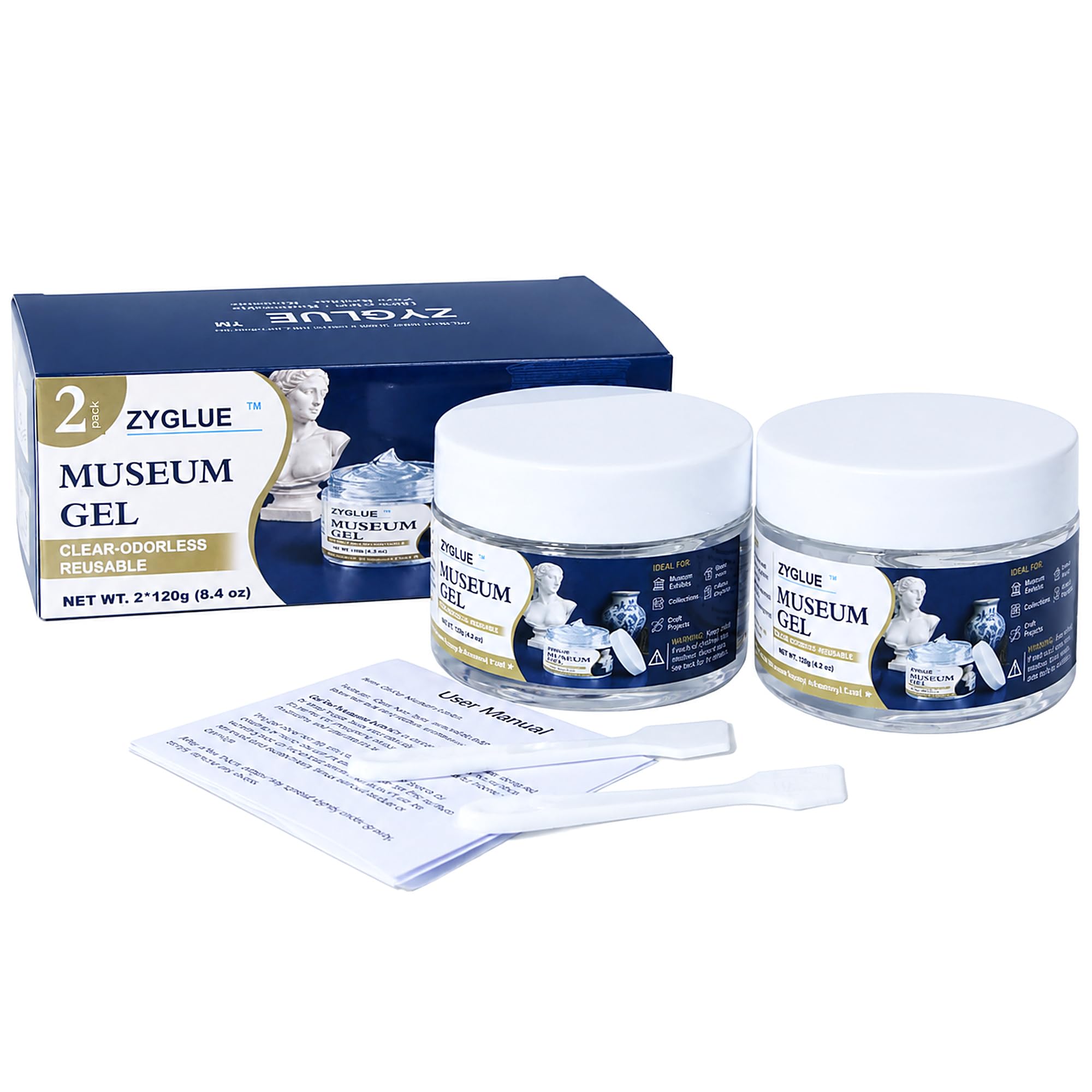
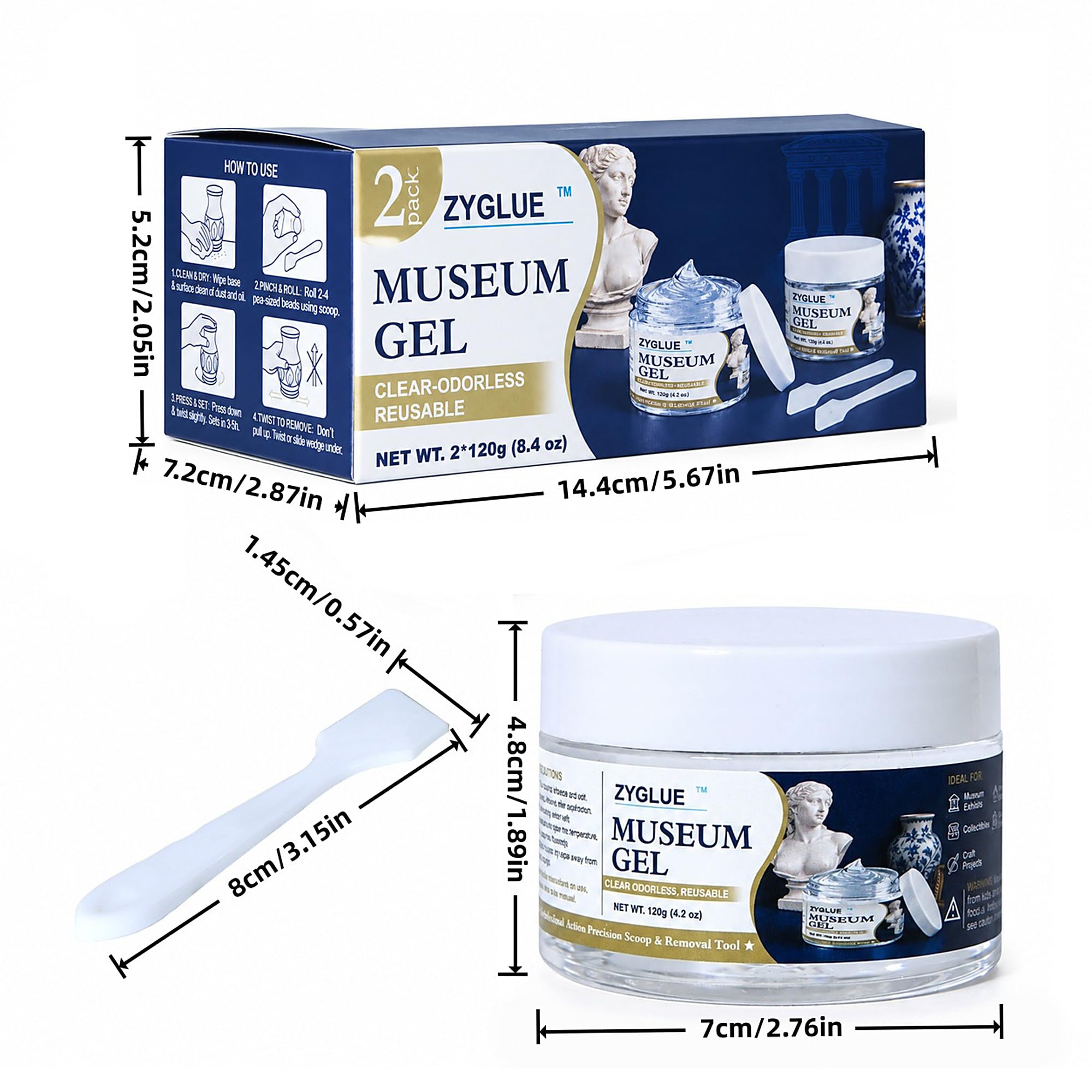
ZYGLUE™ Museum Gel is a clear, removable, reusable gel that helps keep vases and other display items from sliding or tipping on flat surfaces. The user manual says it holds by forming a micro-vacuum between the gel and a smooth surface, not by stickiness. Here is how to use it:
- Clean first. Make sure the bottom of the vase and the surface are clean, dry and free of dust or oil.
- Use a small amount. Take pea-size pieces with clean hands or the spatula. Two to four pea-size beads hold most small items. Too much gel reduces performance.
- Apply and press. Put the gel on the bottom of the vase, place it and press down gently. Keep the gel away from the edges so it does not squeeze out.
- Let it set. Leave the vase undisturbed for 30 to 60 minutes. It holds after about 30 minutes and reaches full hold after 60 minutes.
What about tall vases?
A tall vase usually has a larger or heavier base, so use more beads. Space them evenly around the base, a little in from the edge, so the vase is held all the way around and not just at one point.
After it sets, wiggle the vase gently to check it. Edges may spread slightly after a few hours; trim any excess. Inspect it every 1 to 2 months, especially when the seasons or room temperature change.
Which vases and surfaces work, and which do not?
Good fits: glass, crystal, glazed ceramic and porcelain vases on smooth, sealed surfaces such as glass, metal, sealed marble and granite, and acrylic.
Test a small hidden spot first: wood mantels and tables must be sealed or finished, and you should test first. Do the same on painted, lacquered or plastic surfaces and antique finishes.
Not suitable:
- Very heavy vases or vases with an irregular-shaped base. They may not hold securely and can shift or fall.
- Unfinished wood, raw or porous stone, cork, fabric runners or doilies. The manual warns the gel may leave permanent oil stains on porous materials.
- Wall shelves that tilt, wall-mounted holders, or any vertical or angled surface.
- Outdoors, in direct sun or in hot areas above 104 °F (40 °C), where the gel softens and can lose grip.
Not sure what your surface is? Our guide What Is Museum Gel? covers where it works best.
Can museum gel help in homes with cats, kids or earthquakes?
Many people look for "earthquake gel" or a way to keep vases steady around pets and children. Museum gel helps keep items from sliding or tipping from everyday bumps and vibration. No adhesive can fully protect items in a strong earthquake, and a determined cat can still knock things over, so keep your most valuable pieces somewhere safer too.
If you have children at home, keep the jar away from children and avoid eye contact. The safety data sheet classifies the gel as non-hazardous.
Which ZYGLUE pack should you get?
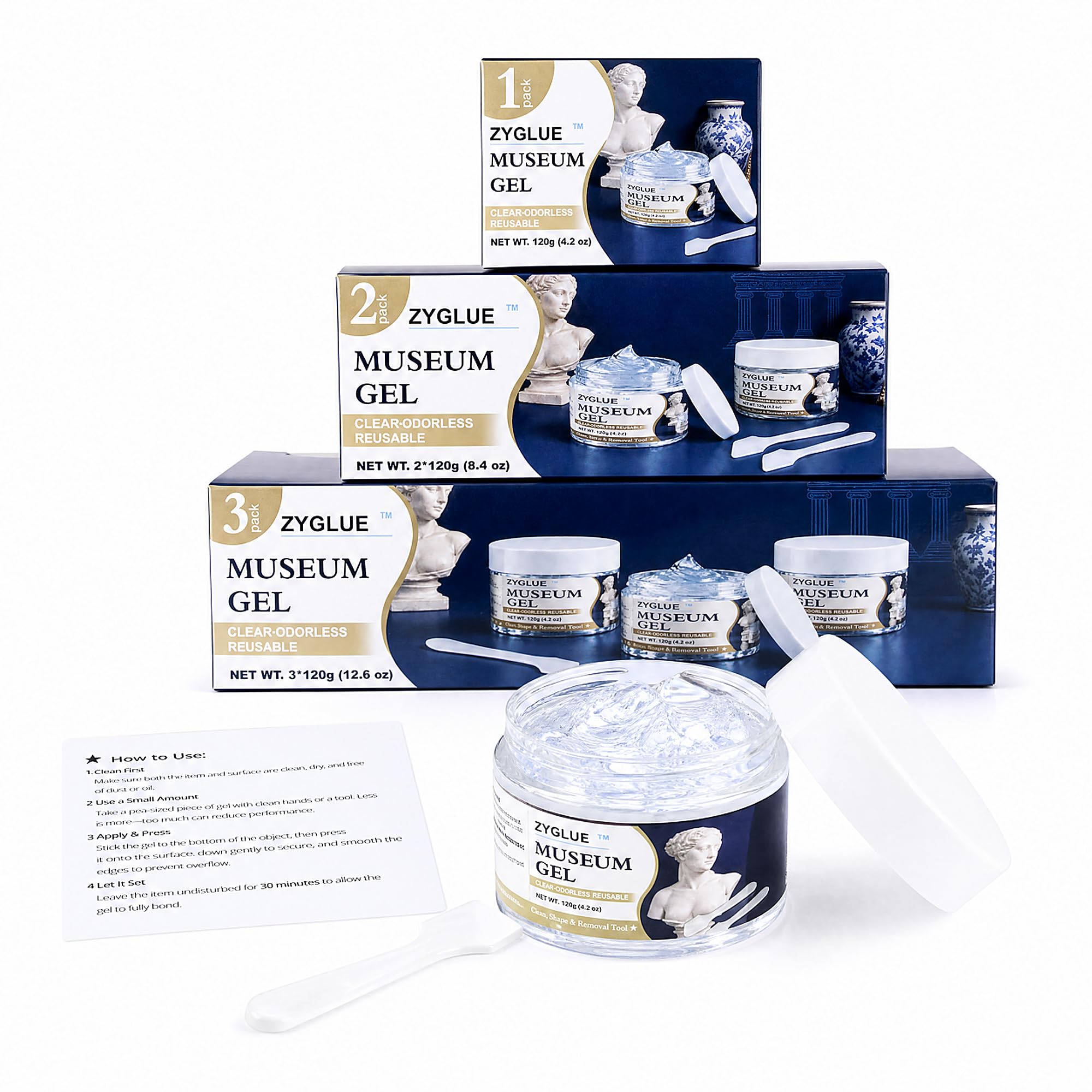
Vases tend to be spread around the house: the mantel, the dining table, a side table, the entry. For that, the ZYGLUE 2 Pack is a good match, with 2 jars, 8.4 oz (240 g) in total and 2 spatulas, so you can keep one jar in each part of the house.
- 1 Pack: 1 jar, 4.2 oz (120 g), 1 spatula
- 2 Pack: 2 jars, 8.4 oz (240 g), 2 spatulas
- 3 Pack: 3 jars, 12.6 oz (360 g), 3 spatulas
Frequently asked questions
How much gel do I need for a vase?
Two to four pea-size beads hold most small items. Use more beads for a larger or heavier base.
How long does it take to set?
It holds after about 30 minutes and reaches full hold after 60 minutes.
Will it hold in an earthquake?
It helps keep items from sliding or tipping from everyday bumps and vibration. No adhesive can fully protect items in a strong earthquake.
Does heat affect it?
Yes. The gel softens above 40 °C (104 °F), so keep it out of direct sun and hot areas.
How do I remove it?
Twist the item gently; do not pull straight up. Roll any leftover gel off with your fingers.
Buy ZYGLUE Museum Gel from SN International
ZYGLUE is SN International's own brand of clear museum gel. You can buy it at retail as a guest or with a free account. Businesses, gift shops and resellers can apply for a business account to see member pricing. Orders ship nationwide from our California warehouse, and real people answer the phone Monday to Friday. See all three packs on the ZYGLUE brand page.