

Earthquake gel is a clear, removable museum gel that helps keep display items from sliding or tipping on shelves from everyday bumps and vibration. It is a useful extra layer of help in earthquake areas, but no adhesive can fully protect items in a strong earthquake, so it works best together with smart shelf placement.
This guide explains what earthquake gel can do, where it falls short, and how to use it the right way on shelves, mantels and cabinets.
What is earthquake gel?
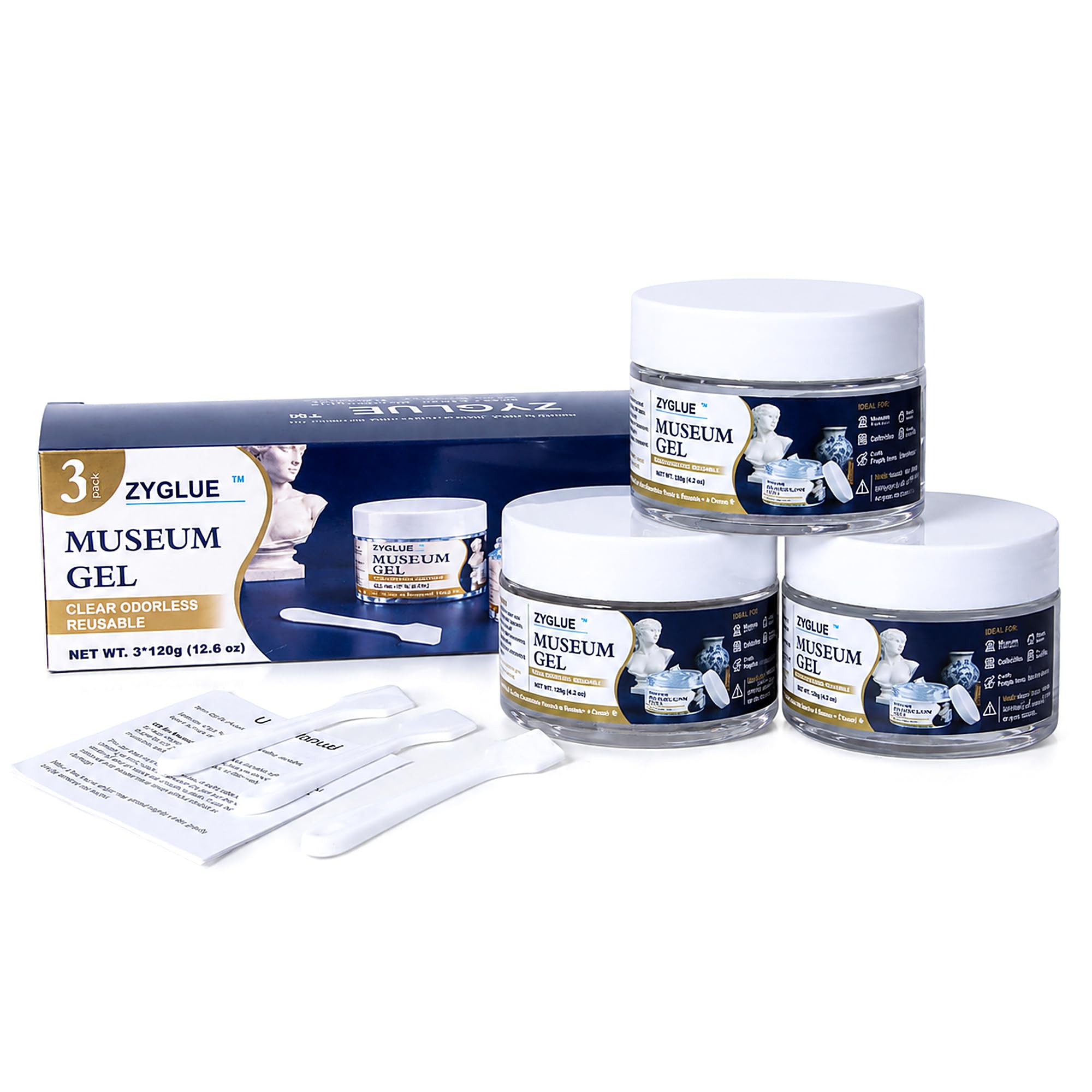
When people search for "earthquake gel" or "earthquake putty for shelves," they usually want something that keeps vases, glass and collectibles in place. In most cases that means museum gel, museum putty or museum wax. All three do the same basic job: a small amount goes under the base of an item and helps keep it from sliding or tipping on a flat surface.
ZYGLUE™ Museum Gel is SN International's clear version. Because it is transparent, it is hard to see under glass and crystal. The user manual explains that it holds by forming a micro-vacuum between the gel and a smooth surface, not by stickiness. For a full overview, read our guide What Is Museum Gel?
What can earthquake gel do?
Used on the right surface, a clear museum gel like ZYGLUE can:
- Help with everyday movement. It helps keep items from sliding or tipping from everyday bumps and vibration.
- Hold many kinds of decor. Glass, crystal, figurines, vases, candle holders, trophies, statues, antiques and collectibles.
- Work in many places. Shelves, mantels, china cabinets, display cases and side tables.
- Stay out of sight. The clear gel is hard to see under glass and crystal.
- Come off and go back on. Twist the item gently to remove it, and reuse the same gel when you rearrange.
What can't earthquake gel do?
Being honest about the limits helps you use it well:
- It cannot fully protect items in a strong earthquake. No adhesive can. Strong shaking can still move or break items, even with gel under them.
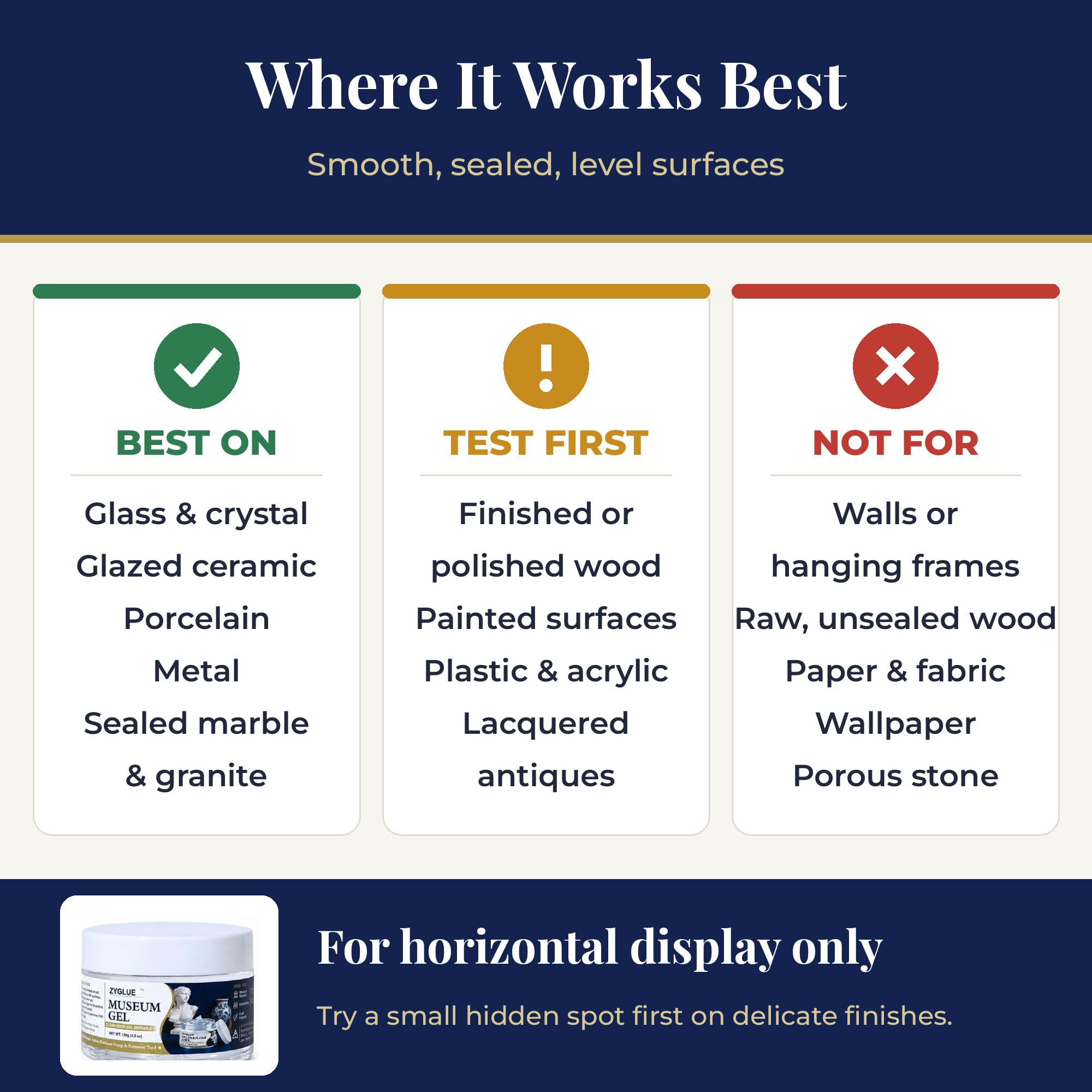
- It is for horizontal surfaces only. Do not use it on walls, to hang frames, or on any vertical or angled surface. The gel can slide and the item can fall.
- It may not hold heavy or irregular-shaped items securely. These can shift or fall.
- It does not like heat. The gel softens above 40 °C (104 °F). In direct sun or hot areas it can lose grip and leave residue.
- It is not for porous surfaces. Skip unfinished wood, raw or porous stone, paper, cork, fabric and wallpaper. The manual warns it may leave permanent oil stains on porous materials.
- It is for indoor use. Do not use it outdoors.
Which surfaces work best?
Earthquake gel works best on smooth, sealed, level surfaces: glass, crystal, glazed ceramic, porcelain, metal, sealed marble and granite, and acrylic. On finished or polished wood, painted, lacquered or plastic surfaces and antique finishes, test a small hidden spot first.
How do you use earthquake gel on shelves?
- Clean first. Make sure the item and the surface are clean, dry and free of dust or oil.
- Use a small amount. Take a pea-size piece with clean hands or the spatula. Two to four pea-size beads hold most small items. Too much gel reduces performance. Use more beads for a larger or heavier base.
- Apply and press. Put the gel on the bottom of the item, place it, and press down gently. Keep the gel away from the edges so it does not squeeze out.
- Let it set. Leave it undisturbed for 30 to 60 minutes.
Afterward, wiggle the item gently to check it. Inspect your display every 1 to 2 months, especially when the seasons or room temperature change. The edges may spread slightly after a few hours; just trim the excess.
What else helps in earthquake country?
Gel is one layer of help, not the whole plan. A few simple habits work alongside it:
- Keep heavier and more valuable pieces on lower shelves.
- Place items back from the front edge of the shelf.
- Keep very fragile pieces inside a closed china cabinet or display case.
- Secure tall bookcases and cabinets following the furniture maker's instructions.
Which ZYGLUE pack should you get?
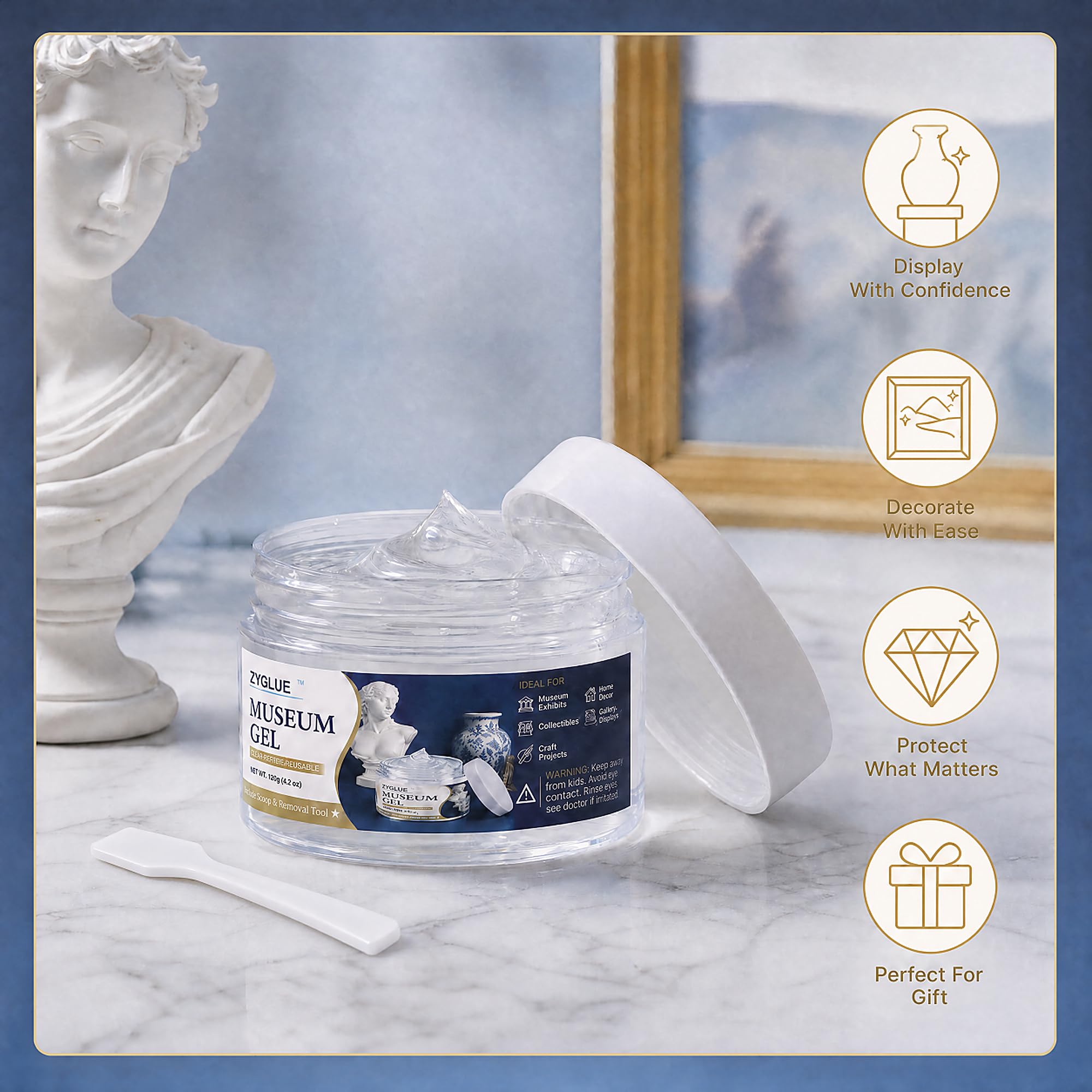
Every jar is 4.2 oz (120 g) and comes with its own spatula.
- ZYGLUE 1 Pack: 1 jar, 4.2 oz (120 g). Good for a shelf or a small collection.
- ZYGLUE 2 Pack: 2 jars, 8.4 oz (240 g). Good for cabinets and several rooms.
- ZYGLUE 3 Pack: 3 jars, 12.6 oz (360 g). Good for a whole home or a big collection, which makes it the usual pick for earthquake-area households.
Earthquake gel FAQ
Will it hold in an earthquake?
It helps keep items from sliding or tipping from everyday bumps and vibration. No adhesive can fully protect items in a strong earthquake.
Is earthquake gel the same as museum putty or museum wax?
It does the same job. Because it is a clear gel, it is less visible under glass and crystal. See Museum Gel vs Museum Putty vs Museum Wax for a side-by-side look.
Can I use it on walls or to hang frames?
No. It is for horizontal surfaces only.
Does heat affect it?
Yes. The gel softens above 40 °C (104 °F), so keep it out of direct sun and hot areas.
How much gel do I need?
Two to four pea-size beads hold most small items. Use more beads for a larger or heavier base.
Is it safe?
The safety data sheet classifies the gel as non-hazardous. Keep it away from children and avoid eye contact.
Buy ZYGLUE Museum Gel from SN International
ZYGLUE is SN International's own brand of clear museum gel. You can buy it at retail as a guest or with a free account. Businesses, gift shops and resellers can apply for a business account to see member pricing. Orders ship nationwide from our California warehouse, and real people answer the phone Monday to Friday. See all three packs on the ZYGLUE brand page.