

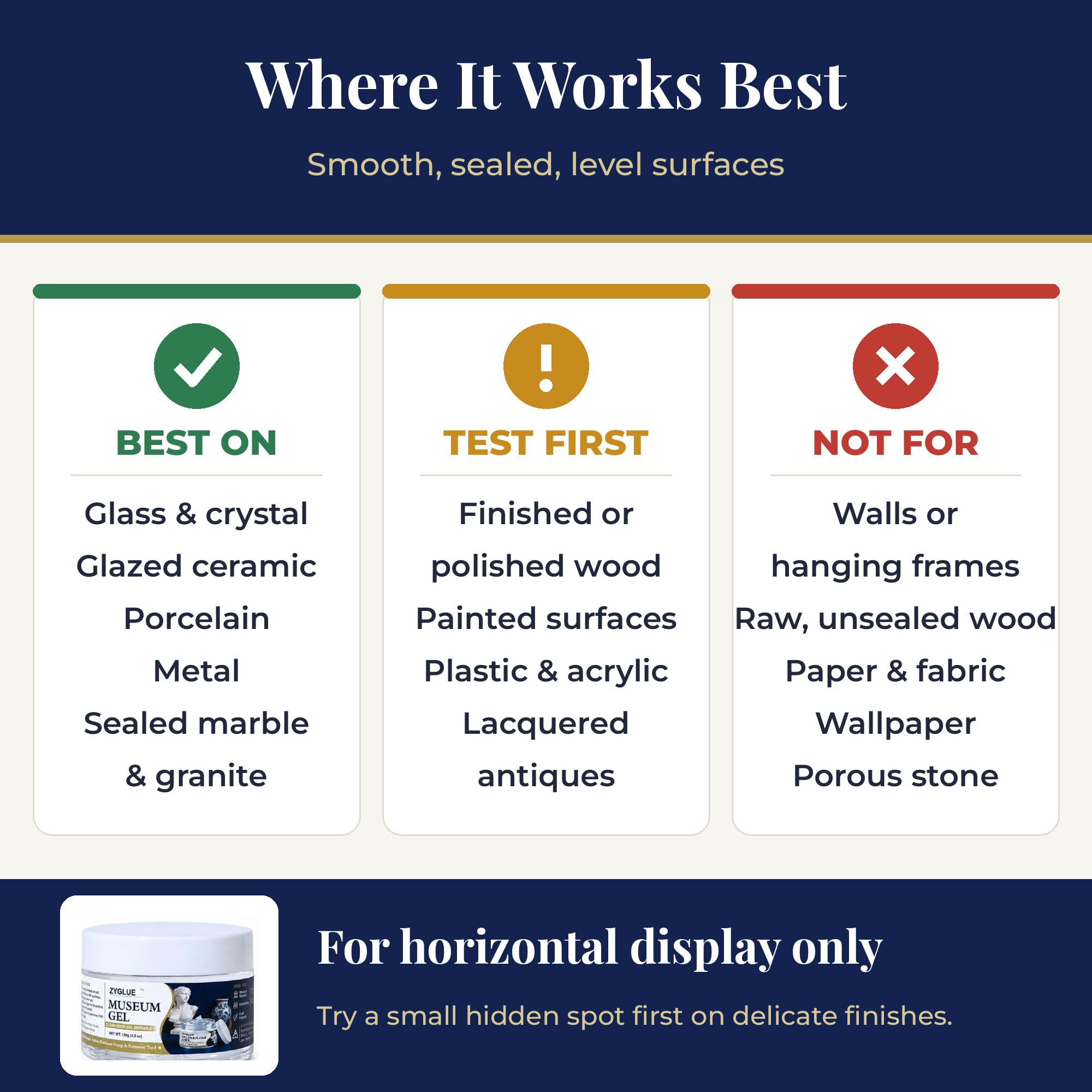
Museum gel can damage unfinished wood, where the user manual warns it may leave permanent oil stains, so use it only on sealed or finished wood furniture. Even on finished wood, test a small hidden spot first, because finishes vary and museum gel removes cleanly only from smooth, sealed surfaces.
Wood shelves, side tables, mantels and china cabinets are some of the most common places people want to use museum gel. Here is how to tell whether your furniture is a good fit and how to use gel on it safely.
Why can museum gel stain unfinished wood?
Unfinished or raw wood is porous, which means it can soak up what touches it. The ZYGLUE™ Museum Gel user manual warns that the gel may leave permanent oil stains on porous materials, including unfinished wood, raw or porous stone, paper, cork, fabric and wallpaper. A sealed or finished surface acts as a barrier, so the gel sits on top of the finish instead of soaking into the wood.
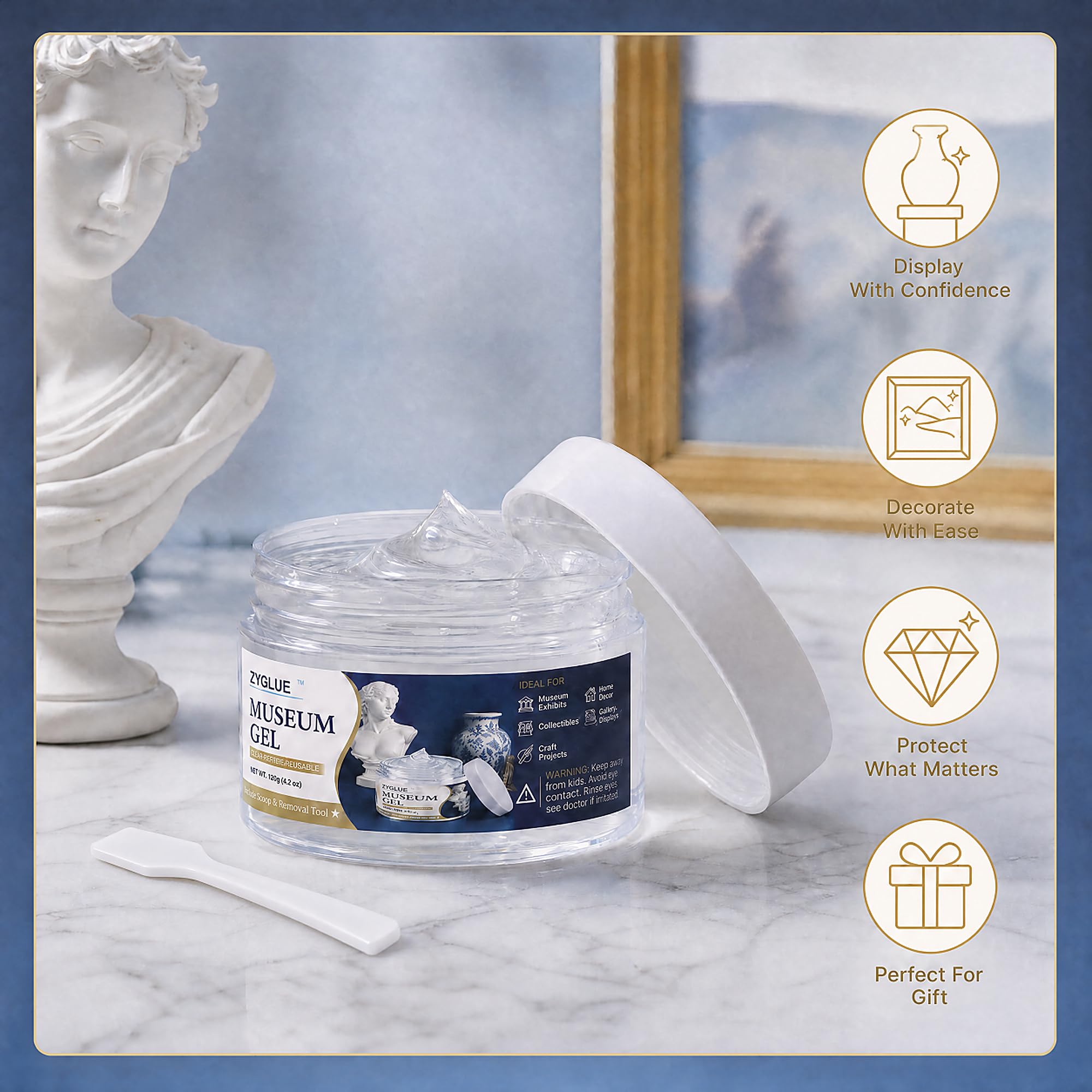
That is also why the gel works better on sealed surfaces. The manual explains that ZYGLUE holds by forming a micro-vacuum between the gel and a smooth surface, not by stickiness. A raw, grainy surface is neither smooth nor sealed.
How can you tell if wood is sealed or finished?
Finished wood usually has a smooth, even sheen and feels slick under your hand, whether the finish is glossy or satin. Unfinished wood feels dry or slightly rough, looks flat, and often shows raw grain. Painted and lacquered pieces count as finished, but they are on the test-first list.
If you are not sure, treat the piece as unfinished and do not use gel on it. Antiques, family heirlooms and refinished pieces deserve extra care, since their finishes can be older, thinner or different from what they look like.
Which wood surfaces are safe to try?
| Surface | Use museum gel? |
|---|---|
| Sealed or finished wood (glossy or satin) | Yes, after testing a small hidden spot |
| Polished wood | Yes, after testing a small hidden spot |
| Painted or lacquered wood | Test a small hidden spot first |
| Antique finishes | Test a small hidden spot first |
| Unfinished or raw wood | No, it may leave permanent oil stains |
How do you test a hidden spot on wood furniture?
- Pick a spot no one sees. The back edge of a shelf, the underside of a tabletop or the inside of a cabinet works well, as long as it has the same finish as the visible area.
- Clean it. Make sure the spot is clean, dry and free of dust or oil.
- Place a pea-size bead. Press a small piece of gel onto the spot.
- Wait. Leave it for at least the full set time of 60 minutes.
- Remove and check. Roll the gel off with your fingers, wipe with a dry cloth, and look closely for any mark, dull patch or change in color. If you see one, do not use gel on that piece.
How do you use museum gel on finished wood?
Once your test spot looks the same as before, use the normal steps:
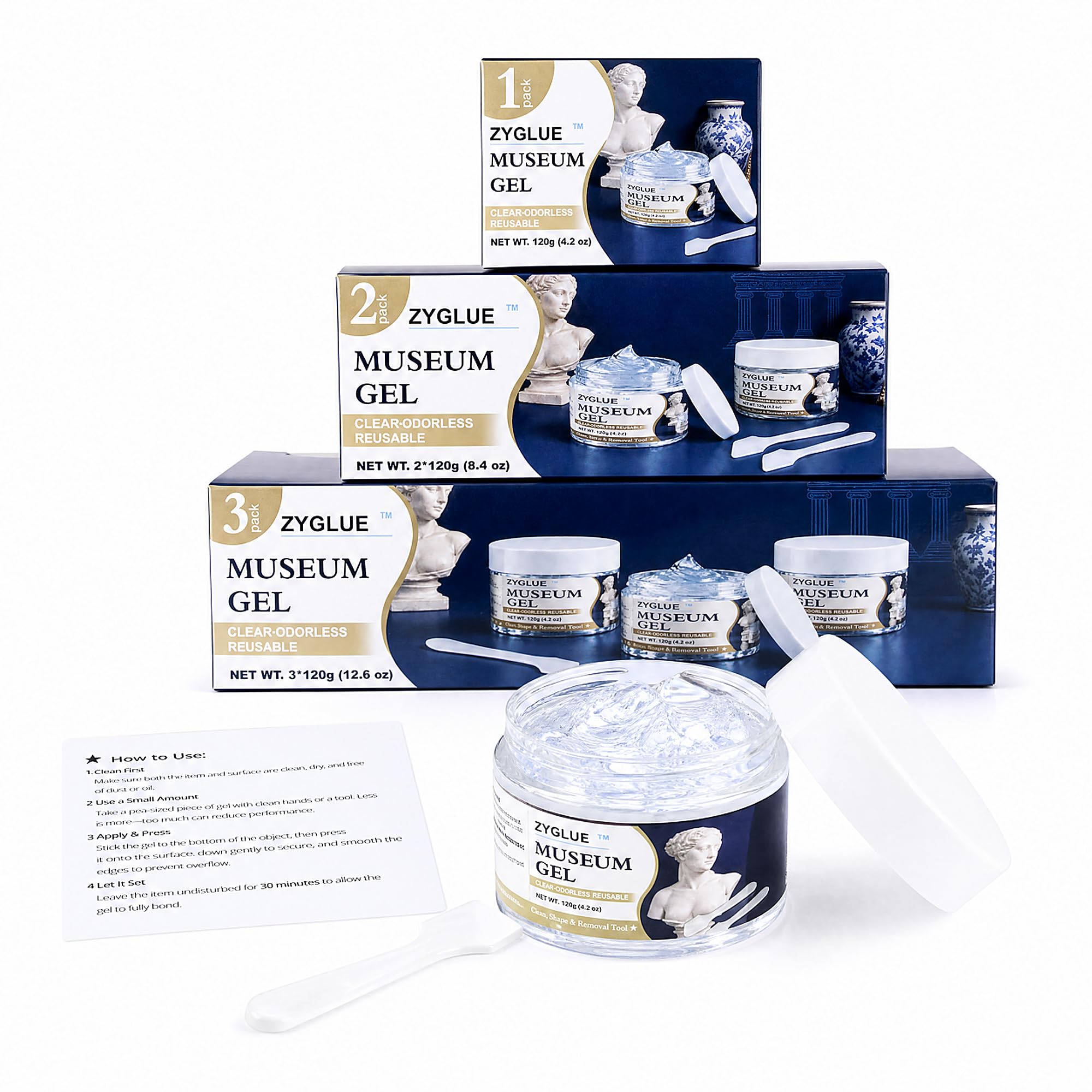
- Clean first. Item and surface clean, dry and free of dust or oil.
- Use a small amount. Two to four pea-size beads hold most small items. Too much gel reduces performance. Use more beads for a larger or heavier base.
- Apply and press. Put the gel on the bottom of the item, place it, and press down gently. Keep the gel away from the edges so it does not squeeze out.
- Let it set. Leave it undisturbed for 30 to 60 minutes.
Remember that it is for horizontal surfaces only, never walls, hanging frames, or vertical or angled surfaces. Keep wood furniture with gel out of direct sun and hot areas, because the gel softens above 40 °C (104 °F) and can lose grip and leave residue. Inspect every 1 to 2 months, especially when the seasons or room temperature change.
How do you remove museum gel from wood?
Twist the item gently and lift; do not pull straight up. Roll any leftover gel off with your fingers and wipe with a dry cloth. For tougher marks, warm water or an alcohol-based wipe can help, but on wood, test a small hidden spot first, since some finishes react to water or alcohol.
Which ZYGLUE pack should you get?
All three packs are on the ZYGLUE brand page. Every jar is 4.2 oz (120 g) and comes with its own spatula.
- ZYGLUE 1 Pack: 1 jar, 4.2 oz (120 g). Good for a shelf or a small collection.
- ZYGLUE 2 Pack: 2 jars, 8.4 oz (240 g). Good for cabinets and several rooms.
- ZYGLUE 3 Pack: 3 jars, 12.6 oz (360 g). Good for a whole home or a big collection.
Museum gel and wood FAQ
Which surfaces can I use it on?
Smooth, sealed surfaces such as glass, glazed ceramic, metal and sealed stone. Test a small hidden spot first on finished wood, paint, plastic or lacquer.
How do I remove it?
Twist the item gently; do not pull straight up. Roll any leftover gel off with your fingers.
Does heat affect it?
Yes. The gel softens above 40 °C (104 °F), so keep it out of direct sun and hot areas.
Is it the same as museum putty or museum wax?
It does the same job. Because it is a clear gel, it is less visible under glass and crystal. Read more in Museum Gel vs Museum Putty vs Museum Wax.
Is it safe?
The safety data sheet classifies the gel as non-hazardous. Keep it away from children and avoid eye contact.
Buy ZYGLUE Museum Gel from SN International
ZYGLUE is SN International's own brand of clear museum gel. You can buy it at retail as a guest or with a free account. Businesses, gift shops and resellers can apply for a business account to see member pricing. Orders ship nationwide from our California warehouse, and real people answer the phone Monday to Friday. See all three packs on the ZYGLUE brand page.